
TLDR
- The best places to put stickers are smooth, clean, dry surfaces like laptops, water bottles, notebooks, packaging, windows, cars, coolers, phone cases, and product boxes.
- Use durable vinyl stickers for laptops, bottles, cars, outdoor gear, coolers, and anything that gets handled often.
- Use paper stickers or roll labels for dry indoor packaging, envelopes, bags, boxes, and short-term labeling.
- Avoid putting stickers on dirty, oily, textured, flexible, hot, or safety-critical surfaces.
- If the sticker will be exposed to water, sunlight, handling, or outdoor weather, choose a more durable sticker material and apply it carefully.
Stickers are easy to order, but choosing where to put them can change how useful they actually are. A sticker on a laptop becomes personal decoration. A sticker on packaging becomes part of the unboxing experience. A sticker on a water bottle travels everywhere. A sticker on a product box can help a small business look more polished.
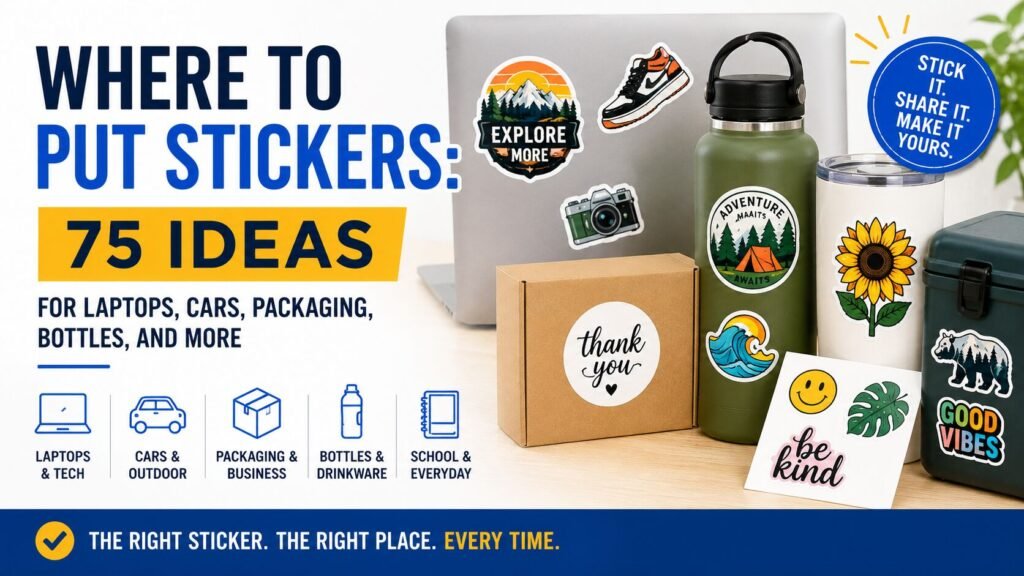
This guide gives you 75 practical sticker placement ideas for laptops, cars, packaging, bottles, events, small businesses, schools, outdoor gear, and more. It also explains which surfaces work best, which ones to avoid, and how to choose the right sticker format for each use.
For most general uses, custom vinyl stickers are the safest all-purpose option because they work well for handouts, merch, laptops, water bottles, packaging inserts, and brand stickers. For product packaging, labels or roll labels may be better when you need to apply the same design repeatedly.
Before You Place a Sticker, Check the Surface
Stickers usually work best on surfaces that are:
- smooth
- clean
- dry
- non-oily
- non-dusty
- mostly flat or gently curved
- not heavily textured
- not exposed to constant scraping
A sticker may struggle on rough plastic, fabric, rubber, silicone, unfinished wood, dusty surfaces, oily containers, peeling paint, heavily textured powder coating, or surfaces that flex a lot.
Before applying, clean the area and let it dry fully. If the sticker is going on a bottle, laptop, car window, cooler, or hard case, wipe away dust, oil, and residue first. A clean surface gives the adhesive a much better chance to bond.
75 Places to Put Stickers
Laptops, Tech, and Everyday Carry
- Laptop lids
One of the most popular places for logo stickers, creator stickers, brand stickers, and personal designs. - Laptop palm rest areas
Good for small stickers, but avoid covering vents, screws, trackpads, or important labels. - Tablet cases
A great spot for school stickers, artist stickers, fandom stickers, and business branding. - Phone cases
Works best on smooth hard cases. Silicone or rubbery cases may not hold stickers well. - Clear phone cases
A sticker can go on the outside, or you can place an unpeeled sticker inside the case for a no-adhesive look. - Headphone cases
Small logo stickers, initials, icons, or band stickers work well on smooth earbud cases. - Gaming consoles
Use removable-friendly placement and avoid vents, ports, disc slots, and heat areas. - Game controllers
Small stickers can work, but avoid grip areas, buttons, seams, and textured plastic. - Portable chargers
A good place for personal labels, logo stickers, or “return to” contact stickers. - Camera cases and gear cases
Stickers can personalize hard cases, but avoid putting them over latches, seals, or serial numbers.
Cars, Travel, and Outdoor Gear
- Car windows
Rear windows and side windows are often better than painted areas because glass is smooth and easy to clean. - Truck windows
Good for business logos, outdoor brands, school decals, and team stickers. - Bumper areas
Use durable outdoor vinyl. Lower bumpers get road grime, sun, car washes, and abrasion, so placement matters. - Tailgates
Smooth tailgates can work well for larger stickers, business logos, and outdoor-themed designs. - Trailer panels
Good for business branding, event signage, safety reminders, or equipment labels when the surface is smooth. - Toolboxes
Great for contractor stickers, mechanic stickers, brand logos, and service labels. - Coolers
A classic sticker surface, but choose durable vinyl because coolers get wet, scraped, and handled. - Camping bins
Use stickers to label gear by category: kitchen, first aid, lights, tools, sleeping gear, or kids’ gear. - Hard cases
Pelican-style cases, camera cases, and equipment cases are excellent sticker surfaces when smooth and clean. - Bike frames
Use caution around curves, cables, moving parts, and areas that rub. Small vinyl stickers work best. - Skateboards
Stickers work well on the underside of boards, but they will wear with scraping and use. - Helmets
Only apply stickers if the helmet manufacturer allows it. Do not cover safety labels, vents, reflectors, or damaged areas.
Water Bottles, Drinkware, and Kitchen Items
- Reusable water bottles
One of the best places for vinyl stickers. Use laminated vinyl for better moisture and handling resistance. - Tumblers
Smooth stainless tumblers are great for logo stickers, name stickers, and decorative designs. - Coffee travel mugs
Stickers can work if the surface is smooth and the mug is hand washed. - Plastic drink bottles
Good for events, teams, and promotions, especially when the sticker is applied to a clean smooth area. - Kids’ water bottles
Name stickers, school stickers, sports stickers, and character stickers are all useful here. - Cooler cups
Use durable vinyl and avoid areas touched constantly by hands or cup holders. - Homebrew bottles
Labels can work well for small-batch beer, kombucha, soda, sauces, and gifts. - Mason jars
Great for pantry labels, candle labels, wedding favors, and homemade food gifts. - Coffee canisters
Use stickers for branding, roast names, flavor labels, or organization.
Packaging, Ecommerce, and Small Business Orders
- Shipping boxes
A logo sticker can make a plain box feel more branded without custom-printed packaging. - Mailer boxes
Use stickers as front seals, inside-lid branding, or thank-you accents. - Padded mailers
Good for small business logos, “thank you” stickers, fragile notices, and seasonal promotions. - Poly mailers
Stickers can add branding, but make sure the surface is clean and not too textured. - Kraft bags
Paper stickers or labels work well for dry packaging, bakery bags, and market goods. - Retail shopping bags
Logo stickers can turn plain bags into branded packaging. - Bakery boxes
A circle or square sticker can seal the box and show the bakery name, flavor, or event theme. - Candle jars
Use front labels for scent names and bottom labels for safety or batch information. - Soap packaging
Stickers can label scent, ingredients, batch number, or brand name. - Coffee bags
Stickers work for roast names, tasting notes, grind type, and small-batch labeling. - Food pouches
Use packaging labels for flavors, product names, QR codes, and branding. - Cosmetic jars
Stickers can work for lids, front labels, and small product identifiers. - Product boxes
Great for brand marks, product names, size variants, and limited-edition labels. - Thank-you cards
Add a small sticker to make inserts feel more personal and finished.
For repeated product packaging, individual stickers can work for smaller runs, but labels or roll labels may be easier when you are applying the same design to many jars, bags, bottles, or boxes. YouStickers explains the difference between stickers and labels in its guide to custom stickers vs custom labels.
Home, Office, and Organization
- Notebooks
Great for school, journaling, planning, clubs, and personal branding. - Planners
Small stickers can mark appointments, habits, reminders, and events. - Binders
Use stickers for class subjects, teams, projects, or office organization. - Folders
A simple sticker can label client files, school subjects, or event materials. - Storage bins
Use stickers to label toys, craft supplies, seasonal decor, tools, or inventory. - Pantry containers
Stickers can label flour, sugar, pasta, rice, snacks, coffee, tea, and spices. - Home office drawers
Use small labels for chargers, cables, pens, shipping supplies, and paperwork. - Craft supply boxes
Stickers help organize vinyl, beads, paint, thread, paper, tools, or stickers themselves. - Tool drawers
Use durable labels for sockets, bits, blades, fasteners, or specialty tools. - Laundry room containers
Label detergent, pods, dryer sheets, stain remover, and cleaning supplies. - Kids’ school supplies
Name stickers are useful on folders, notebooks, pencil boxes, lunch boxes, and water bottles.
Events, Schools, Teams, and Groups
- Event welcome bags
Add a logo, date, theme, or sponsor sticker to bags for weddings, conferences, retreats, or parties. - Name tags
Paper stickers can work well for short-term indoor events. - Party favor bags
Use themed stickers for birthdays, baby showers, graduations, and weddings. - Wedding favor jars
Stickers can show names, dates, monograms, or thank-you messages. - School laptops or tablets
Use approved name labels, club stickers, or school spirit designs. - Team water bottles
Add player names, numbers, mascots, or team logos. - Sports helmets or gear bags
Use caution on helmets, but bags, cases, and bottles are excellent sticker surfaces. - Band merch tables
Stickers can go on tip jars, display boards, packaging, or be sold as merch. - Conference badges
Stickers can show roles, interests, achievements, or sponsor branding. - Fundraiser products
Add stickers to baked goods, jars, candles, bags, boxes, and donation envelopes.
Business, Branding, and Local Marketing
- Front counter displays
Add small stickers to display stands, checkout signs, or tip jars. - Coffee shop cups
Stickers can brand plain cups, sleeves, or seasonal drink packaging. - Food truck packaging
Use stickers on bags, boxes, sauce cups, napkin bundles, or loyalty cards. - Restaurant takeout bags
A branded sticker can seal the bag and make the order feel more complete. - Salon product bags
Add a logo sticker, appointment reminder sticker, or thank-you sticker. - Real estate folders
Use stickers for closing gifts, client packets, moving boxes, or homebuyer materials. - Contractor equipment
Stickers can label tools, boxes, ladders, bins, and jobsite materials. - Service reminder labels
HVAC, plumbing, electrical, appliance, and auto service businesses can use stickers for service dates and contact information. - QR code stickers
Put them on packaging, receipts, menus, windows, counters, review cards, event signage, or product inserts where customers can scan easily.
Best Sticker Material by Placement
| Placement | Best Sticker Type |
|---|---|
| Laptops | Vinyl stickers |
| Water bottles | Laminated vinyl stickers |
| Cars and windows | Outdoor-friendly vinyl stickers |
| Product packaging | Labels, roll labels, or packaging stickers |
| Bakery boxes and dry bags | Paper stickers or labels |
| Coolers and outdoor gear | Durable laminated vinyl |
| Event name tags | Paper stickers |
| Notebooks and planners | Paper or vinyl |
| QR codes | White vinyl or high-contrast label material |
| Sticker sheets | Kiss cut sticker sheets |
If the sticker will be handled, washed, used outdoors, or placed on a long-term surface, vinyl is usually the safer choice. If the sticker is for dry indoor packaging or short-term use, paper may be enough.
Places You Should Not Put Stickers
Some surfaces are not good sticker candidates.
Avoid putting stickers on:
- dirty surfaces
- oily surfaces
- dusty surfaces
- wet surfaces
- rough concrete
- unfinished wood
- fabric
- silicone
- rubbery phone cases
- peeling paint
- hot appliances
- stove surfaces
- safety warnings
- airbags
- license plates
- driver visibility areas
- sensors or cameras
- vents
- moving parts
- rental property surfaces without permission
A sticker should not block anything important. Do not cover serial numbers, safety labels, barcodes, legal labels, airbag panels, vehicle sensors, camera lenses, vents, or equipment instructions.
Practical Recommendation
For general sticker placement, start with smooth, clean, dry surfaces. Laptops, water bottles, notebooks, cars, windows, packaging, coolers, hard cases, and product boxes are all strong choices.
Choose vinyl when the sticker should last. Choose paper when the sticker is for dry, short-term indoor use. Choose labels or roll labels when you are applying the same design to many products or packages.
The simplest rule is:
If people will keep it, handle it, wash it, or take it outside, use vinyl. If it is temporary packaging or indoor labeling, paper may be enough.
Common Mistakes to Avoid
Applying stickers before cleaning the surface
Dust, oil, wax, and moisture can keep the adhesive from bonding. Clean and dry the surface first.
Putting stickers on textured plastic
Textured plastic gives the adhesive less contact area. Smooth plastic is usually much better.
Using paper stickers outdoors
Paper stickers are not the right choice for cars, bottles, coolers, windows, or outdoor gear.
Covering important information
Do not place stickers over serial numbers, QR codes, barcodes, warning labels, safety instructions, or legal markings.
Using tiny QR code stickers
QR codes need enough size and contrast to scan. Do not shrink them too aggressively.
Applying stickers to curved surfaces without planning
Small stickers usually work better on tight curves than large rectangles. Water bottles, helmets, jars, and tumblers need careful placement.
Choosing the wrong sticker for the job
A cute sticker design still needs the right material. Match the sticker to the surface, environment, and expected use.
FAQs
Where is the best place to put stickers?
The best places to put stickers are smooth, clean, dry surfaces like laptops, water bottles, notebooks, packaging, windows, cars, coolers, hard cases, and product boxes.
Can I put stickers on a water bottle?
Yes. Water bottles are one of the most popular sticker surfaces. Use durable vinyl stickers and apply them to a clean, dry, smooth area. Hand washing usually helps stickers last longer.
Can I put stickers on my car?
Yes, but use outdoor-friendly vinyl stickers and apply them to clean glass or smooth painted surfaces. Avoid sensors, license plates, safety labels, and areas that get constant scraping or road debris.
What surfaces do stickers not stick to well?
Stickers usually do not stick well to rough, dusty, oily, wet, rubbery, silicone, fabric, or heavily textured surfaces.
Should I use paper or vinyl stickers for packaging?
Use paper stickers for dry indoor packaging, bags, boxes, and short-term labels. Use vinyl or film labels when the packaging may face moisture, handling, refrigeration, or outdoor exposure.
Can I put stickers on a laptop?
Yes. Laptops are one of the best sticker surfaces because they are smooth, flat, and highly visible. Avoid vents, screws, ports, and trackpads.
Can stickers go on walls?
Some stickers can go on walls, but wall paint is more delicate than glass or plastic. Adhesive type, paint condition, texture, humidity, and removal method all matter. Test carefully and avoid fragile paint.
What is the best all-purpose sticker placement?
A laptop, water bottle, notebook, or package insert is usually the best all-purpose placement because the sticker is visible, useful, and easy to apply.
