
TLDR
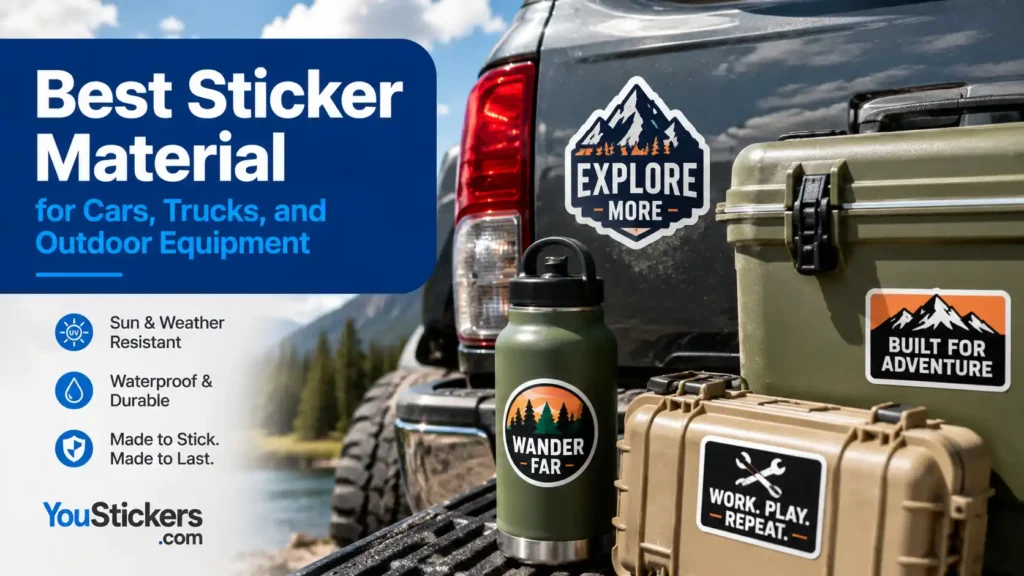
- The best sticker material for cars, trucks, and outdoor equipment is usually laminated outdoor vinyl.
- Choose white vinyl for the most predictable color and readability.
- Choose bumper stickers or removable vehicle decals when the sticker may need to come off later.
- Avoid paper stickers outdoors; they can absorb moisture, tear, fade, and break down faster.
- For rough plastic, rubber, powder-coated surfaces, helmets, and oily equipment, test first because adhesive performance depends heavily on the surface.
The best sticker material for cars, trucks, and outdoor equipment is usually a durable vinyl sticker with a protective laminate. Vehicles and gear deal with sun, rain, road grime, heat, cold, washing, rubbing, and regular handling, so the sticker needs more than a nice print. It needs a material that can flex, resist moisture, protect the ink, and hold to the surface.
For most standard outdoor sticker projects, start with custom vinyl stickers or bumper stickers instead of paper stickers. YouStickers describes its custom stickers as durable vinyl with matte or gloss laminate, and its homepage positions waterproof vinyl stickers for custom sizes, custom shapes, and everyday use.
Best Overall Material: Laminated Outdoor Vinyl
Laminated outdoor vinyl is the safest default for cars, trucks, trailers, toolboxes, coolers, hard cases, helmets, and outdoor equipment. Vinyl works well because it is flexible, smooth, and better suited for weather exposure than standard paper.
The laminate matters because it adds a protective top layer over the printed design. For car stickers especially, YouStickers recommends outdoor-rated vinyl, UV laminate, clean application, smart placement, and gentle washing to help stickers stay brighter longer.
In practical terms, the best outdoor sticker material should have:
- a vinyl face material
- a protective laminate
- outdoor-friendly ink and finish
- an adhesive suited to the surface
- enough thickness to feel durable without being bulky
- a design with strong contrast and readable text
For most customers, laminated white vinyl is the easiest recommendation. It gives the artwork a clean white base, keeps colors more predictable, and works on more surfaces than clear vinyl.
Why Paper Stickers Are a Poor Choice Outdoors
Paper stickers are fine for notebooks, packaging inserts, folders, planners, and dry indoor uses. They are usually not the right material for cars, trucks, or outdoor equipment.
Outdoor surfaces are hard on stickers. A sticker on a vehicle may face direct sun, rain, road salt, dust, mud, car washes, temperature swings, and abrasion. A sticker on equipment may be rubbed by gloves, tools, straps, fuel cans, cleaning chemicals, or dirt.
Paper can absorb moisture and break down. It can wrinkle, tear, stain, or lose readability much faster than vinyl. If the sticker is going outside, paper is usually the wrong starting point unless the use is very short term.
Best Material by Outdoor Use Case
| Use case | Best material choice | Why |
|---|---|---|
| Car windows | Laminated vinyl or vehicle decal material | Smooth glass is usually sticker-friendly and easy to clean |
| Truck windows | Laminated vinyl or bumper sticker material | Good for fleet logos, small decals, clubs, and outdoor messaging |
| Bumpers | Bumper sticker material | Built for vehicle messaging and easier future removal |
| Painted vehicle panels | Outdoor vinyl, used carefully | Works best on clean, sound paint; removal risk depends on paint condition |
| Toolboxes | Laminated permanent vinyl | Handles regular use better than paper |
| Coolers and hard cases | Laminated vinyl, test first | Great on smooth hard surfaces, harder on textured plastic |
| Trailers | Laminated outdoor vinyl | Useful for logos, safety labels, QR codes, and identification |
| Construction equipment | Durable vinyl or industrial label material | Needs strong contrast, durability, and surface testing |
| Helmets or hard hats | Sticker approved for that helmet use | Do not cover damage or violate safety policies |
| Boats and marine gear | Outdoor vinyl, marine-specific if needed | Saltwater, sun, and constant moisture may require specialty materials |
White Vinyl vs Clear Vinyl for Cars and Equipment
White vinyl is the best choice for most car, truck, and outdoor equipment stickers. The white base helps colors look solid and keeps text readable on dark, tinted, metallic, dirty, or uneven backgrounds.
Clear vinyl can look great on windows, glass, or smooth surfaces when you want a subtle no-background look. The tradeoff is contrast. Clear areas disappear, and light-colored text may become hard to read on tinted glass, dark paint, black plastic, or busy surfaces.
Use white vinyl when the design includes:
- small text
- QR codes
- safety information
- phone numbers
- business names
- logos with light colors
- bright illustrations
- designs going on dark surfaces
Use clear vinyl when the design is simple, high-contrast, and meant to blend into glass or a clean smooth surface.
Matte vs Gloss for Outdoor Stickers
Both matte and gloss can work outdoors when the sticker is made from the right material and protected with laminate. The better choice depends on how the sticker will be viewed.
Gloss vinyl can make colors look brighter and more eye-catching. It is a strong choice for bold logos, sports decals, outdoor brands, event stickers, bumper stickers, and colorful artwork.
Matte vinyl has less glare and a softer look. It can be easier to read in bright light, especially for text-heavy designs, QR code labels, equipment labels, minimalist logos, and professional branding.
For outdoor equipment, matte is often the safer readability choice. For vehicle stickers meant to grab attention, gloss often works well.
Permanent vs Removable Adhesive for Vehicles
Adhesive choice matters almost as much as material.
Use permanent adhesive when the sticker needs to stay attached long-term. This makes sense for toolboxes, hard cases, equipment labels, product identification, warning labels, and outdoor gear.
Use removable adhesive when future removal matters. This is often better for bumper stickers, temporary vehicle messaging, campaign stickers, seasonal promos, parking decals, and short-term window graphics. YouStickers’ FAQ says custom stickers, transfer stickers, vinyl lettering, labels, and front-adhesive stickers use permanent adhesive, while custom bumper stickers use removable adhesive.
“Permanent” does not mean impossible to remove. It means the adhesive is designed to build a stronger bond. “Removable” does not mean weak. It means the adhesive is designed to come off more cleanly from compatible surfaces.
The Surface Matters More Than the Sticker
A great sticker can still fail on the wrong surface. Smooth glass and clean painted metal are usually easier. Rough plastic, rubber, silicone, textured coolers, dirty equipment, and powder-coated surfaces can be harder.
3M explains that low-surface-energy plastics, including polypropylene and polyethylene, are difficult for adhesives to bond to. This matters because many outdoor bins, coolers, equipment housings, and plastic containers are made from plastics that do not always accept stickers easily.
Before ordering a large batch, consider the actual surface:
- Is it smooth or textured?
- Is it clean or dusty?
- Is it painted, powder-coated, plastic, glass, or rubber?
- Is it exposed to oil, fuel, mud, salt, sun, or pressure washing?
- Does the sticker need to come off later?
- Will it be rubbed by hands, straps, tools, gloves, or cargo?
If the surface is textured, oily, rubbery, or low-energy plastic, test before ordering a large quantity.
Vehicle Paint Warnings
Be careful with stickers on painted vehicle surfaces. A sticker may remove cleanly from one vehicle and cause issues on another. Paint age, repaint quality, clear coat condition, sun damage, wax, ceramic coatings, and previous repairs can all change the result.
Avoid applying stickers over:
- peeling paint
- cracked clear coat
- fresh paint
- rust
- body filler
- damaged bumpers
- oxidized paint
- heavily waxed or coated surfaces
Windows are usually the safer vehicle surface. Paint can work, but removal risk is higher.
Outdoor Equipment Warnings
Outdoor equipment is often dirtier, rougher, and harder on stickers than vehicles. Toolboxes, jobsite equipment, generators, trailers, hard cases, coolers, helmets, and machines may face abrasion, oil, heat, solvents, dust, and rough handling.
For basic branding, laminated vinyl is usually a good starting point. For safety labels, compliance labels, chemical exposure, fuel exposure, high heat, or industrial equipment, you may need a specialty label material designed for that environment.
For hard hats and helmets, follow the helmet manufacturer’s guidance and workplace safety rules. Do not use stickers to cover cracks, dents, expiration labels, inspection areas, or damage.
How to Apply Outdoor Stickers So They Last Longer
Start with a clean, dry surface. Wash away dirt and grime, then dry the area completely. Avoid applying stickers over wax, oil, silicone sprays, dust, or cleaner residue.
Apply the sticker in mild conditions when the surface is not too cold or too hot. 3M’s vehicle graphics guidance recommends applying vehicle graphics when both the air and vehicle surface are above 60°F / 16°C for best success with the referenced films.
After applying, press firmly from the center outward. Pressure helps the adhesive make better contact with the surface. 3M also notes that firm pressure increases adhesive flow and contact, while time and temperature can further increase adhesion.
For best results:
- clean the surface first
- dry it completely
- apply in mild temperatures
- avoid touching the adhesive
- press from the center outward
- seal down all edges with firm pressure
- wait before washing or heavy use
- avoid abrasive scrubbing
- avoid pressure-washing the edges
Practical Recommendation
For most cars, trucks, and outdoor gear, choose laminated white vinyl. It gives you the best combination of durability, color clarity, readability, and everyday outdoor performance.
Choose bumper stickers when the sticker is going on a vehicle and may need to come off later. Choose standard custom vinyl stickers when the sticker is going on equipment, hard cases, toolboxes, bottles, windows, or outdoor gear and needs to stay put.
Choose clear vinyl only when the surface is part of the design and the artwork has enough contrast. Choose specialty or industrial labels when the sticker needs to survive heavy chemicals, fuel, high heat, safety compliance, or harsh equipment use.
Common Mistakes to Avoid
Do not use paper stickers on cars, trucks, or outdoor equipment.
Do not apply stickers to dusty, oily, wet, waxed, or textured surfaces.
Do not assume every plastic is sticker-friendly. Polypropylene and polyethylene can be difficult for adhesives, according to 3M’s surface energy guidance.
Do not use clear vinyl when the design needs a white background for readability.
Do not make vehicle stickers too detailed. Car and truck stickers are often viewed from several feet away.
Do not apply stickers over damaged vehicle paint.
Do not pressure-wash directly at sticker edges.
Do not put important text too close to the cutline.
Do not order a large batch for equipment without testing the actual surface first.
FAQs
What is the best sticker material for cars?
The best sticker material for cars is usually laminated outdoor vinyl. It is more durable than paper, handles moisture better, and works well for windows, bumpers, and smooth vehicle surfaces.
What is the best sticker material for trucks?
For trucks, use laminated vinyl or bumper sticker material depending on placement. Use bumper stickers for vehicle messaging and removable use. Use laminated vinyl for windows, toolboxes, trailers, and smooth equipment surfaces.
Are vinyl stickers safe for car paint?
Vinyl stickers can be used on clean, sound car paint, but removal risk depends on the paint condition. Avoid damaged, fresh, peeling, oxidized, or repainted surfaces unless you are comfortable with the risk.
Are car stickers better on windows or paint?
Windows are usually safer because glass is smooth, easy to clean, and less likely to be damaged during removal. Painted surfaces can work, but they require more caution.
Are clear stickers good for cars?
Clear stickers can look good on windows, but they are not always the best choice for dark paint, tinted glass, or designs with light colors. White vinyl is usually more readable.
What sticker material is best for outdoor equipment?
Laminated vinyl is a good starting point for outdoor equipment, hard cases, toolboxes, trailers, coolers, and gear. For chemical exposure, fuel exposure, high heat, safety labels, or harsh industrial use, choose a specialty label material designed for that environment.
