
TLDR
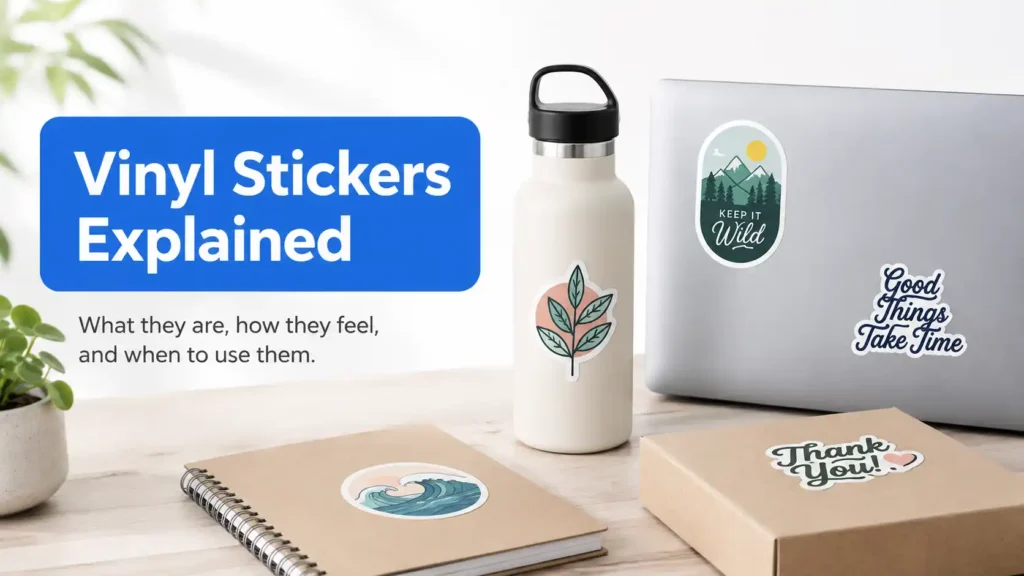
- Vinyl stickers are a durable all-around choice for laptops, water bottles, packaging inserts, merch, events, helmets, notebooks, and smooth outdoor surfaces.
- They usually feel smoother, sturdier, and less paper-like than basic paper stickers.
- A laminate can change both the feel and the look: matte feels softer and lower-glare, while gloss feels shinier and more vibrant.
- Use individual vinyl stickers for handouts, merch, and brand visibility. Use roll labels when you need to label jars, bottles, bags, boxes, or products in batches.
Vinyl stickers are popular because they solve a simple problem: people want stickers that feel good, look clean, and hold up better than a basic paper sticker. If a sticker is going on a laptop, water bottle, notebook, shipping box, helmet, window, toolbox, or event table, vinyl is usually one of the safest starting points.
At YouStickers, custom stickers are printed on durable vinyl and finished with a matte or gloss laminate, with a proofing process that lets you review the shape and setup before production. That makes vinyl stickers a practical choice when you want something custom, cleanly cut, and useful for everyday handling.
What Are Vinyl Stickers?
Vinyl stickers are stickers printed on a flexible vinyl film instead of standard paper. The printed vinyl is paired with an adhesive layer and a backing liner, so the sticker can be peeled and applied to a surface when it is ready to use.
Most vinyl stickers use pressure-sensitive adhesive. That means the adhesive bonds when you press the sticker onto a surface. It does not need heat, water, or a wet glue step to activate. Pressure-sensitive adhesive performance depends on the adhesive formula, the surface, the amount of pressure used during application, and the conditions where the sticker is applied.
In plain terms, a vinyl sticker is built to be more durable than a basic paper sticker. It is flexible, smooth, and better suited for regular handling, moisture exposure, and many indoor or outdoor uses.
How Vinyl Stickers Feel
A vinyl sticker usually feels smooth, flexible, and slightly sturdy in the hand. It should not feel like thin printer paper. The exact feel depends on the material, thickness, adhesive, laminate, and finish.
A matte vinyl sticker usually has a softer, lower-glare surface. It feels clean and modern, especially for logos, packaging inserts, minimalist artwork, and designs with small text.
A glossy vinyl sticker feels shinier and slicker. It can make colors look more vivid and can work well for bold artwork, bright logos, cartoon designs, event stickers, and designs that need more visual pop.
The laminate matters because it is the top layer the customer touches. YouStickers describes its custom stickers as durable vinyl finished with matte or gloss laminate, and the laminate helps protect the printed surface while also changing the final look.
Vinyl Stickers vs Paper Stickers
Vinyl and paper stickers can both look great, but they are not meant for the same job.
| Feature | Vinyl stickers | Paper stickers |
|---|---|---|
| Feel | Smooth, flexible, more durable | More papery and lightweight |
| Moisture resistance | Better for water bottles, laptops, packaging inserts, and many outdoor uses | Better for dry indoor use |
| Best uses | Merch, handouts, brand stickers, outdoor gear, bottles, laptops, packaging extras | Short-term labels, planner stickers, indoor packaging, disposable uses |
| Finish options | Often matte, gloss, clear, holographic, or specialty finishes | Usually simpler and less durable |
| Best buyer | Someone who wants a sticker people may keep and use | Someone who needs a simple indoor sticker or label |
For most customer-facing stickers, vinyl is the better choice when the sticker needs to feel like a keepsake, giveaway, merch item, or durable brand piece. Paper can still make sense for simple, dry, short-term uses, but vinyl is usually the stronger option when the sticker might be handled often.
When to Use Vinyl Stickers
Vinyl stickers are a good fit when durability, feel, and presentation matter. They work especially well for:
- laptop stickers
- water bottle stickers
- helmet stickers
- notebook and planner covers
- event giveaways
- artist merch
- small business packaging inserts
- thank-you stickers
- brand logo stickers
- toolbox and equipment stickers
- shop windows and smooth glass
- car windows or smooth outdoor surfaces
- school, club, team, and organization stickers
Vinyl is also a strong option when you want the sticker to move with the customer. A product label usually stays on the product. A good vinyl sticker can end up on a customer’s bottle, laptop, car window, notebook, or workspace. That makes it useful for creators, coffee shops, bands, schools, ecommerce brands, local businesses, and event organizers.
When Vinyl Stickers May Not Be the Best Choice
Vinyl stickers are versatile, but they are not the answer for every project.
If you are labeling hundreds of jars, bottles, pouches, or boxes, roll labels may be easier to apply in batches. YouStickers makes the same basic distinction between stickers and labels: stickers are usually better for merch, handouts, events, and brand visibility, while labels are built for bottles, jars, boxes, and packaging workflows.
Vinyl stickers may also struggle on rough, dusty, oily, wet, or highly textured surfaces. Adhesive needs good contact with the surface to bond well. Smooth glass, clean plastic, painted metal, and sealed surfaces are usually easier than raw wood, fabric, brick, concrete, rubbery plastics, or powdery textured surfaces.
Avoid using standard vinyl stickers on delicate painted walls unless the product is specifically meant for wall use. A strong adhesive may lift paint during removal, especially on old paint, fresh paint, matte wall paint, or weak drywall surfaces.
Matte vs Gloss Vinyl Stickers
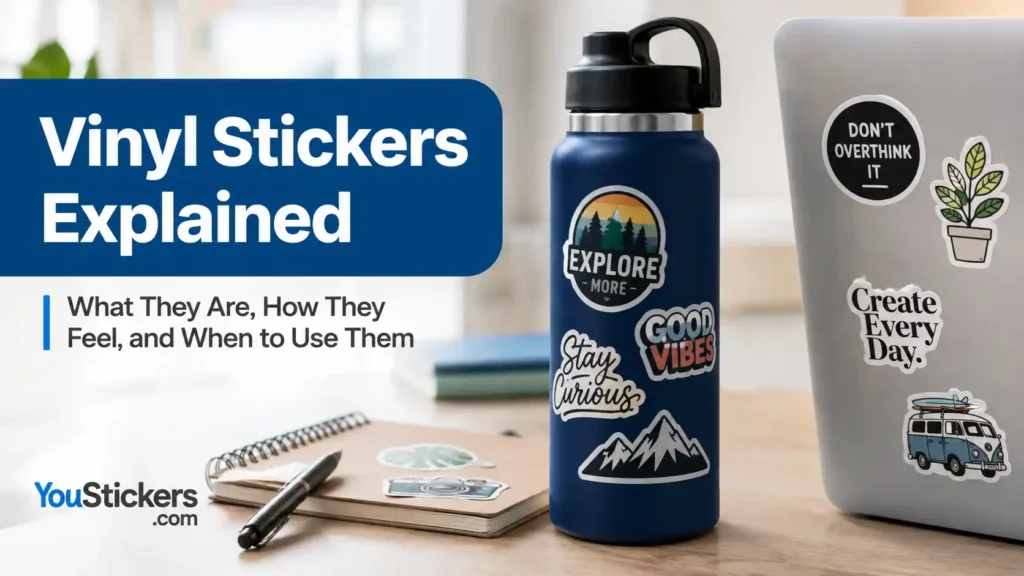
Matte and gloss are the two most common finish choices for vinyl stickers.
Choose matte vinyl stickers when you want a softer look, less glare, and a more understated finish. Matte is a good fit for simple logos, small business branding, minimal artwork, muted colors, packaging inserts, and designs where readability matters.
Choose gloss vinyl stickers when you want shine, contrast, and brighter-looking color. Gloss works well for bold illustrations, colorful mascots, event designs, sports stickers, kids’ stickers, and designs that should catch the light.
Both finishes can work well. The better choice depends less on “quality” and more on the design style. If your artwork is clean, minimal, or text-heavy, matte is often safer. If your artwork is colorful, playful, or high-contrast, gloss can give it more energy.
White Vinyl, Clear Stickers, and Specialty Looks
White vinyl is the safest default for most full-color sticker designs. The white base helps colors stay readable and predictable, especially when the sticker goes on a dark laptop, tinted bottle, colored box, or busy background.
Clear stickers are different. They let the surface show through, which can look great on glass, jars, bottles, windows, and clear packaging. The tradeoff is that transparent areas disappear into the surface, and some colors may not stand out as much on dark or patterned backgrounds.
Specialty vinyl options, such as holographic, chrome, or other reflective finishes, are better for designs where the material itself is part of the look. They are often used for artist merch, limited drops, collectibles, event promos, and designs that benefit from light reflection.
For a first order, white vinyl is usually the simplest choice. Once you know the design works, clear or specialty finishes can be used when the surface or artwork calls for them.
Practical Recommendation: What Should You Order?
For most first-time buyers, start with custom vinyl stickers in a simple size, readable design, and matte or gloss finish. Vinyl is flexible enough for merch, giveaways, packaging inserts, laptops, bottles, notebooks, and general branding.
Use individual vinyl stickers when each sticker needs to be handed out, sold, included in a package, or used on its own. Start with YouStickers vinyl stickers if you want a custom shape, durable vinyl, and a proof before printing.
Use roll labels instead if the sticker is really a product label. If you are applying the same design to many jars, bottles, bags, boxes, or retail products, roll labels are usually easier to store, peel, and apply repeatedly.
Use sticker sheets when you want several smaller designs grouped together. Sticker sheets are helpful for artists, planner stickers, kids’ designs, event sets, and themed collections.
Common Mistakes to Avoid
Do not apply vinyl stickers to a dirty surface. Dust, oil, moisture, and residue can weaken the bond. Clean and dry the surface first.
Do not put important text too close to the cutline. Leave a safe zone around small text, thin lines, faces, QR codes, and important logo details.
Do not assume clear stickers work on every background. Clear stickers can look great on glass and smooth packaging, but white vinyl is usually more predictable for full-color artwork.
Do not pick gloss if glare will hurt readability. Gloss can look great, but matte is often easier to read under bright light.
Do not order individual stickers when you actually need product labels. If you are applying the same design to a large batch of products, roll labels may be a better workflow.
Do not expect every surface to behave the same. Smooth, clean surfaces are easier. Rough, rubbery, dusty, oily, and textured surfaces are harder.
Do not treat drinkware as indestructible. For the longest life, avoid harsh scrubbing, long soaking, and high-heat dishwashing unless the product is specifically rated for that use. YouStickers also recommends hand-washing drinkware for the longest sticker life.
FAQs
Are vinyl stickers waterproof?
Many laminated vinyl stickers are made for water resistance and everyday moisture exposure. YouStickers describes its custom stickers as waterproof vinyl and says its custom stickers are made for everyday resistance to water, scratches, and normal outdoor exposure.
Do vinyl stickers feel thick?
Vinyl stickers usually feel sturdier than basic paper stickers, but they should still be flexible. The final feel depends on the vinyl, adhesive, laminate, and backing liner.
Can vinyl stickers go on water bottles?
Yes, vinyl stickers are commonly used on water bottles, especially when they are laminated and applied to a clean, smooth, dry surface. For best results, apply firm pressure and avoid soaking or harsh scrubbing.
Are vinyl stickers good for cars?
Vinyl stickers can work well on smooth car windows and some exterior surfaces when the material is appropriate for outdoor use. Avoid applying stickers over damaged paint, fresh paint, dirty surfaces, rubber trim, or textured plastic.
Are vinyl stickers the same as decals?
In everyday use, people often use “sticker” and “decal” interchangeably. A decal often refers to a sticker used for decoration, branding, windows, vehicles, or signage, while “sticker” is the broader customer-friendly term.
Should I choose matte or gloss vinyl stickers?
Choose matte if you want a softer, lower-glare look. Choose gloss if you want more shine and color pop. If the design has small text, matte is often the safer choice for readability.
