
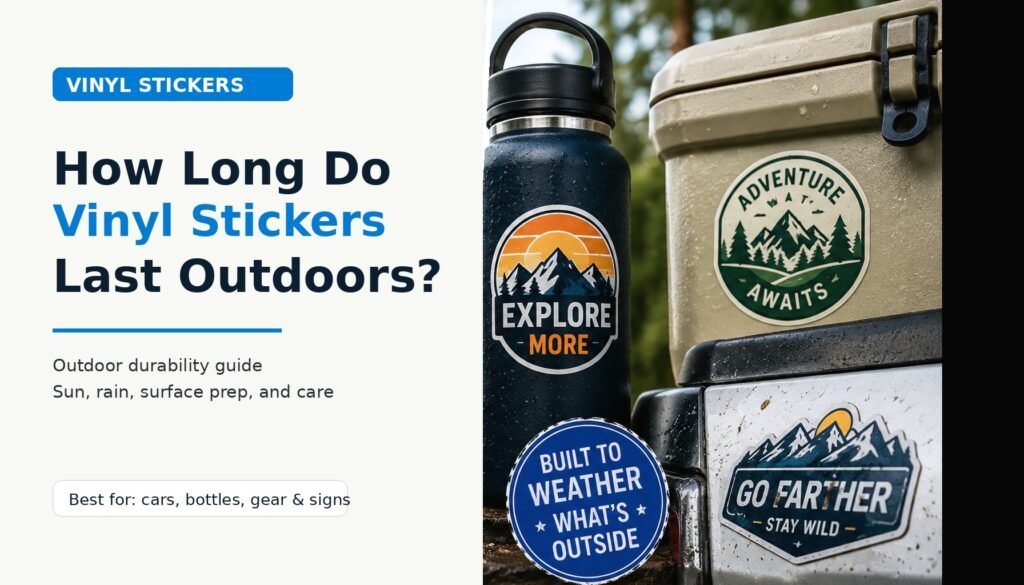
TLDR
- A well-made laminated vinyl sticker can last outdoors for several years, but the exact lifespan depends on sun exposure, surface prep, weather, washing, abrasion, and placement.
- Outdoor vinyl stickers usually last longest on smooth, clean, vertical surfaces like windows, panels, trailers, signs, and hard cases.
- Stickers wear faster on bumpers, water bottles, coolers, helmets, tools, and other surfaces that get scraped, washed, handled, or left in full sun.
- UV laminate makes a big difference because it helps protect the printed surface from sunlight, scratches, moisture, and regular handling.
- For the longest outdoor life, choose weatherproof laminated vinyl, apply it to a clean dry surface, avoid harsh washing, and keep it away from constant abrasion when possible.
How long do vinyl stickers last outdoors? The honest answer is: usually several years when the sticker is made from outdoor-friendly vinyl and protected with laminate, but no outdoor sticker lasts forever. Sunlight, heat, rain, snow, road grime, car washes, dishwashers, and everyday abrasion all wear stickers down over time.
For most outdoor sticker projects, the goal is not to find a sticker that is indestructible. The goal is to choose a sticker built for the job, apply it correctly, and avoid the conditions that shorten its life too quickly.
The Short Answer: Several Years, With Conditions
A quality vinyl sticker can last outdoors for years, especially when it is printed on durable vinyl, finished with a protective laminate, and applied to a clean, smooth surface. At YouStickers, custom vinyl stickers are described as durable, weatherproof, laminated vinyl and can be cut to any size or shape.
That said, “outdoors” can mean very different things.
A sticker on a shaded storefront window has a much easier life than a sticker on a truck bumper. A sticker on the side of a trailer will usually age differently than one on the top of a cooler. A sticker on a water bottle that gets washed every day will wear faster than a sticker on a clean indoor laptop that only occasionally goes outside.
So instead of asking only how long vinyl stickers last outdoors, it is better to ask:
- What surface is the sticker going on?
- Will it sit in direct sun?
- Will it be vertical or horizontal?
- Will it be washed, scraped, handled, or exposed to road grime?
- Does it have a laminate?
- Was the surface cleaned before application?
Those details matter as much as the sticker material itself.
What Affects Outdoor Sticker Lifespan?
Outdoor sticker lifespan depends on a combination of material, finish, surface, weather, and care. Avery Dennison’s guide to self-adhesive vinyl explains that vinyl durability depends on several factors, including the expected period of use, surface type, vertical or horizontal application, climate conditions, and whether the graphic is printed, laminated, and converted correctly.
That same logic applies to custom stickers. A vinyl sticker is not just one thing. It is a stack of decisions: face material, adhesive, print method, ink, laminate, shape, cut, surface, and placement.
UV Sunlight Is Usually the Biggest Outdoor Factor
Sunlight is one of the main reasons outdoor stickers fade. UV exposure can slowly reduce color vibrancy, weaken printed surfaces, and make some colors age faster than others. This is especially noticeable on vehicles, signs, equipment, and outdoor gear that sit in full sun every day.
A sticker on a north-facing window may stay brighter longer than one on a south-facing car window. A sticker on a garage-kept vehicle will usually have an easier life than one on a work truck parked outside year-round.
YouStickers’ own sticker care and durability guide points out that UV sunlight, heat, water, detergents, abrasion, and repeated handling all affect sticker life. The guide also notes that full sun over months or years will gradually fade any printed color.
The practical takeaway: if outdoor life matters, start with laminated vinyl and avoid placing the sticker in the harshest possible sun exposure when you have a choice.
Laminate Makes Vinyl Stickers Last Longer
A laminate is a clear protective layer over the printed sticker. It helps protect the ink from scratches, moisture, sunlight, and regular handling. For outdoor stickers, laminate is one of the most important upgrades.
3M describes overlaminates and protective films as a way to preserve printed graphics and help protect them from the elements. Avery Dennison also describes digital overlaminate films as important for durability and color longevity, especially for exterior applications like fleet graphics, vehicle wraps, marine graphics, and outdoor signage.
That does not mean every laminated sticker has the same lifespan as a commercial vehicle wrap, but the principle is the same: the printed surface needs protection.
At YouStickers, custom stickers are printed on durable vinyl and finished with matte or gloss laminate. Matte and gloss affect the look, but both can add protection compared with an unlaminated sticker.
Vertical Stickers Usually Last Longer Than Horizontal Stickers
Placement matters. A sticker on a vertical surface usually lasts longer than a sticker lying flat on a horizontal surface.
Vertical stickers shed rain, dust, and debris more easily. Horizontal stickers take more direct sun, collect water, hold dirt, and get more surface wear. That is why a decal on a side window may age better than a sticker on the top of a cooler or toolbox.
Avery Dennison gives a useful industry example with its DOL Max overlaminates, noting that some products offer up to 7-year vertical durability but only up to 2-year horizontal durability, because horizontally applied graphics are more vulnerable to environmental conditions. You can see that distinction in Avery Dennison’s DOL Max Series announcement.
For custom stickers, the lesson is simple: a sticker on a flat upward-facing surface will usually have a tougher life than one on a clean vertical surface.
Outdoor Sticker Lifespan by Use Case
| Outdoor Use | Expected Wear Level | What Usually Happens |
|---|---|---|
| Storefront window | Lower to moderate | Can last a long time if cleaned gently and placed on smooth glass |
| Car window | Moderate | Usually better than bumpers because glass is smooth and vertical |
| Car bumper | High | More road grime, washing, sun, and abrasion |
| Trailer or equipment panel | Moderate to high | Good surface if smooth, but exposure can be harsh |
| Cooler | High | Sun, water, scraping, ice, and handling shorten life |
| Water bottle | High | Washing, friction, bags, cup holders, and hand contact wear stickers faster |
| Helmet or hard hat | High | Curves, sweat, handling, bags, and abrasion can lift edges |
| Outdoor sign | Varies | Better when vertical and laminated; harsher when exposed to full sun and weather |
| Laptop used outdoors | Low to moderate | Usually more affected by handling than weather |
These are practical categories, not guarantees. A clean, laminated vinyl sticker on a shaded sign may look good for years. A sticker on a cooler lid used every weekend in direct sun may wear much faster.
Cars, Bumpers, and Outdoor Decals
Car stickers have a difficult outdoor life. They deal with UV sunlight, heat, rain, snow, road grime, automatic car washes, pressure spray, and cleaning chemicals.
For cars, YouStickers recommends starting with outdoor-rated vinyl, choosing UV laminate, applying to a clean dry surface, placing the sticker away from the harshest abrasion when possible, and washing gently. You can see this guidance in YouStickers’ article on how to keep car stickers from fading.
Best car placement areas usually include:
- rear windows
- side windows
- smooth painted panels
- tailgates
- clean trailer panels
- smooth toolboxes
- higher bumper sections
Harder areas include lower bumpers, wheel-adjacent panels, curved trim, textured plastic, and places that get scraped by bags, tools, boots, or brushes.
Water Bottles, Coolers, and Outdoor Gear
Water bottles and coolers are technically outdoor sticker uses, but they are often harder on stickers than a wall, window, or sign. They get wet, handled, scraped, washed, dropped, packed into bags, left in hot cars, and rubbed against other surfaces.
For reusable bottles, YouStickers recommends laminated white vinyl as the safest choice in its guide to the best sticker material for water bottles. The same article explains that bottles create a smaller margin for error because the sticker needs to handle water, scratches, curved surfaces, and regular abuse.
To help bottle and cooler stickers last longer:
- Apply to a clean, smooth surface.
- Avoid textured powder-coated areas when possible.
- Keep the sticker away from the bottom edge where it gets scraped.
- Avoid placing it exactly where your hand grips every time.
- Hand wash when possible.
- Avoid soaking the sticker.
- Do not scrub the sticker with abrasive pads or brushes.
Dishwashers are especially hard on stickers. YouStickers’ care guide explains that dishwashers combine high heat, strong detergents, long soak cycles, high-pressure spray, and abrasion from other items, which can shorten sticker life quickly.
Signs Your Outdoor Sticker Is Wearing Out
Even a good vinyl sticker eventually reaches the end of its outdoor life.
Common signs include:
- fading or dull color
- edge lifting
- cracking
- brittle areas
- cloudy or scratched laminate
- peeling corners
- adhesive residue around the edge
- loss of contrast
- text becoming harder to read
- water or dirt working under the sticker
If the sticker is personal decoration, you can leave it until you are ready to replace it. If the sticker represents a business, brand, safety message, QR code, event, or product, replace it sooner. A faded or peeling sticker can make the whole message feel neglected.
How to Make Vinyl Stickers Last Longer Outdoors
The best way to extend outdoor sticker life is to make the right choices before the sticker is applied.
1. Choose laminated vinyl
For normal outdoor use, vinyl with laminate is the right starting point. Paper stickers are not a good choice for long-term outdoor use because moisture and weather can cause them to wrinkle, tear, fade, or break down.
2. Clean the surface first
Adhesive needs a clean surface to bond well. Wash away dirt, dust, wax, oil, grease, and residue before applying. For bottles and hard surfaces, YouStickers recommends cleaning first and wiping the application area with isopropyl alcohol to remove oils.
3. Apply at the right temperature
Cold surfaces can reduce adhesion. Very hot surfaces can also create problems. Room temperature or moderate outdoor conditions are best. YouStickers recommends applying stickers to bottles at room temperature and letting them set before washing.
4. Press firmly and let it bond
After applying the sticker, press evenly across the whole surface, especially near the edges. Let the adhesive set before washing, scraping, or heavy use. YouStickers recommends giving stickers time to bond and waiting 24 hours before washing water bottles.
5. Avoid constant abrasion
Abrasion is one of the fastest ways to wear down a sticker. Avoid spots where the sticker will be scraped by keys, shoes, bags, brushes, tools, zippers, cup holders, or rough cleaning.
6. Wash gently
Use mild soap, water, and a soft cloth. Avoid abrasive pads, stiff brushes, harsh solvents, and aggressive pressure washing near sticker edges.
7. Use smarter placement
A slightly less exposed spot can make a big difference. A sticker that avoids full-day sun, road spray, and constant rubbing will usually last longer.
Common Mistakes That Shorten Outdoor Sticker Life
Using paper stickers outdoors
Paper stickers are fine for dry indoor packaging, notebooks, envelopes, and temporary use. They are not the right choice for cars, water bottles, trailers, outdoor gear, or wet surfaces.
Skipping laminate
Vinyl is a strong starting point, but unlaminated printed stickers are more exposed to scratches, sunlight, and moisture. Laminate gives the print an extra layer of protection.
Applying stickers to dirty or waxed surfaces
Dust, wax, polish, oil, and residue can keep adhesive from bonding properly. A sticker may look fine at first and then lift later.
Applying over texture
Rough plastic, heavy powder coating, wood grain, deep texture, and uneven surfaces give adhesive less contact area. Smooth surfaces are better.
Placing stickers where they get scraped
A sticker on the lower bumper, cooler lid, bottle grip area, or toolbox corner may wear quickly because it is constantly hit or rubbed.
Pressure washing the edges
High-pressure water can lift corners or force water under the sticker. Keep pressure spray away from sticker edges.
Practical Recommendation
For outdoor use, order laminated vinyl stickers instead of paper stickers. Choose a clean design with strong contrast, avoid tiny text, and apply the sticker to a smooth, clean, dry surface.
For cars, trailers, windows, outdoor gear, and general outside use, start with YouStickers vinyl stickers or a more use-specific format like bumper stickers when the design is made for vehicle placement.
For water bottles, coolers, and reusable drinkware, choose laminated white vinyl and hand wash whenever possible. For product packaging that needs labels applied in batches, consider whether a label format is a better fit than individual stickers.
The simplest rule is this:
Vinyl stickers can last outdoors for years, but they last longest when they are laminated, applied cleanly, placed smartly, and cleaned gently.
FAQs
Are vinyl stickers good for outdoor use?
Yes. Vinyl stickers are usually the best sticker type for outdoor use, especially when they include a protective laminate. For normal outdoor use, laminated vinyl is a much better choice than paper.
Do vinyl stickers fade in the sun?
Yes, vinyl stickers can fade over time in direct sunlight. UV exposure gradually affects printed color, especially on vehicles, signs, and surfaces that sit outside all day. UV laminate helps slow that process.
Do vinyl stickers last longer on glass or paint?
Vinyl stickers often do well on smooth glass because it is flat, nonporous, and easy to clean. Smooth painted surfaces can also work well, but wax, grime, heat, road debris, and washing can affect durability.
How long do vinyl stickers last on cars?
A quality laminated vinyl car sticker can last for years, but lifespan depends heavily on placement, sun exposure, car washes, road grime, and surface prep. Rear windows and smooth vertical panels are usually easier on stickers than lower bumpers.
Can vinyl stickers survive rain?
Yes, laminated vinyl stickers are generally a strong choice for rain and normal outdoor moisture. The bigger risks are poor surface prep, lifted edges, constant soaking, harsh cleaners, and abrasion.
Can vinyl stickers go through the dishwasher?
Some vinyl stickers may survive dishwasher cycles, but dishwashers shorten sticker life because of heat, detergent, soaking, pressure spray, and abrasion. For maximum longevity, hand wash bottles and tumblers instead.
Should outdoor stickers be matte or gloss?
Either can work. Matte has a softer, lower-glare look. Gloss usually makes colors feel brighter and more reflective. For outdoor durability, the bigger question is whether the sticker is laminated, not whether the finish is matte or gloss.
Why did my outdoor sticker peel so fast?
Fast peeling usually comes from poor surface prep, applying to a rough or oily surface, applying in cold or hot conditions, placing the sticker on a curve or high-friction area, or washing too soon after application.
