
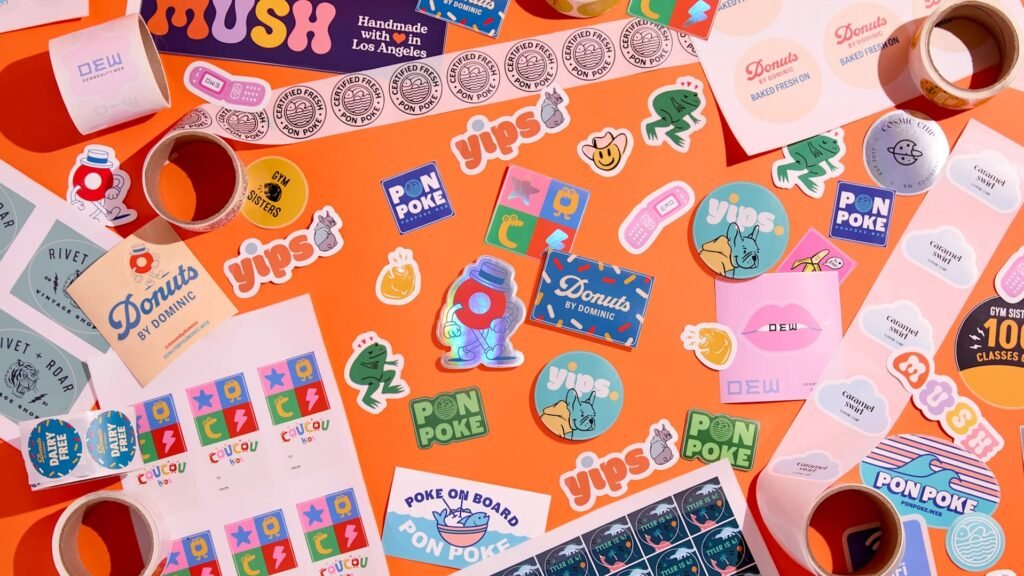
Custom stickers vs custom labels sounds like a small print-shop question. It is not. Pick the wrong format and you end up fighting your own packaging, your workflow, or both. I have seen people try to label bottles with individual die cut stickers, and i would not recommend that life choice. The real question is simple: what job does the printed piece need to do once it leaves the press?
At a glance, stickers and labels can look pretty similar. Both are adhesive, both can be printed in full color, and both can be cut into clean shapes. But they usually live very different lives. Stickers are often made to be handed out, sold, tucked into orders, or stuck on laptops, water bottles, and notebooks. Labels are usually built for containers, retail packaging, shipping, and other jobs where clean placement matters more than novelty.
Custom Stickers Vs Custom Labels, The Short Answer
If you need something for merch, giveaways, branding inserts, or event handouts, stickers are usually the better call. If you need something to live on a bottle, jar, box, pouch, or packaged product, labels usually make more sense.
That is also how YouStickers frames the split. Its main site describes stickers as a fit for merch, handouts, events, and visibility, while labels are presented as the packaging-focused option for jars, bottles, boxes, retail goods, and repeat application. That is the cleanest starting point, honestly.
So if you are staring at the screen wondering whether to click the sticker category or the label category, start with one question: is this piece meant to be kept and noticed, or applied and left in place?
What Custom Stickers Are Better At
Stickers are better when the goal is reach, personality, and reuse. A good sticker moves. It travels from the package to the customer’s bottle, laptop, toolbox, sketchbook, or phone case. That matters because the brand keeps showing up long after the order is delivered.
This is why vinyl stickers are so common for artists, coffee shops, bands, conventions, local businesses, and ecommerce brands that want a giveaway people will actually keep. A sticker can be a bonus item, a thank-you extra, or a low-cost branded product on its own. It does not need to explain the product. It just needs to look good and be worth sticking somewhere.
Stickers also give you more freedom in presentation. Die cut shapes feel more personal. Kiss cut versions feel easier to peel and hand out. Laminated vinyl feels better in the hand than a thin disposable piece. And if repeat visibility is the goal, that tactile part matters more than people think.
If you want a quick internal companion piece, Labels vs Stickers: Differences and Use Cases gives the short version from the site itself.
What Custom Labels Are Better At
Labels are better when the print needs to stay on the product and do a clear job every time. That might mean branding a candle jar, naming a hot sauce bottle, identifying a skincare container, or showing required product details on a packaged food item.
This is where custom stickers vs custom labels stops being a style discussion and becomes an operations discussion. Labels are usually easier to apply in batches, easier to reorder consistently, and easier to line up on packaging. They also make more sense when your design needs to carry information such as ingredients, net contents, directions, barcodes, or warnings.
And in some categories, labels are not optional in any real sense. If you sell packaged food, for example, FDA guidance and 21 CFR Part 101 require certain statements on labels, including basics like business identification and net quantity. So if your product is going on a shelf or into regulated commerce, the right label format matters for more than appearance.
Material matters too. Film and BOPP labels are popular for product packaging because they handle moisture, oils, curved surfaces, and regular handling better than basic paper stock. That is why labels are such a common fit for jars, bottles, bath products, beverage containers, and refrigerated items. If you are working on bottles or cans, How To Setup Beer Labels is worth reading even if your product is not beer. The sizing logic still helps.
Custom Stickers Vs Custom Labels for Workflow
A lot of people decide based on appearance first. I think workflow deserves equal weight.
If you are applying a few pieces by hand and the object changes every time, stickers can be fine. If you are applying hundreds of the same design to the same bottle, jar, or pouch, labels are usually the smarter format. Roll labels exist for a reason. They speed up application, reduce frustration, and help everything look more consistent from unit to unit.
This becomes even more obvious if you use a label applicator machine. In that case, roll finishing matters because the rewind direction affects how the label feeds and lands on the product. That is not the kind of thing anyone wants to discover after ordering the wrong format. Individual stickers are great when each piece is meant to stand alone. They are not great when your team has to apply 500 of them to containers before lunch.
There is also a brand perception issue here. A package label that sits flat, reads cleanly, and lands in the same place every time looks intentional. A sticker that is slightly oversized, too thick for the curve, or awkward to place can make the whole product feel less polished.
When Ordering Both Makes More Sense
A lot of small brands do not actually need to choose one forever. They need both, because stickers and labels solve different problems.
A candle brand might use a front label and a warning label on the jar, then include one die cut logo sticker in the shipment. A skincare company might need waterproof bottle labels for the product itself, then use branded stickers as box seals or freebies. A coffee brand might label each bag but also hand out stickers at markets so people remember the name later.
This is the part people miss. The label helps sell the product in the moment. The sticker helps the brand stay visible after the product is used, opened, or shared. One handles function. The other handles memory.
If you run a business with packaging and promotion happening at the same time, ordering both is not overkill. It is just realistic.
Which One Should You Order?
Here is the blunt version.
Choose stickers if:
you want handouts, inserts, merch, event swag, or something customers will stick on personal items.
Choose labels if:
you need a clean packaging format for jars, bottles, boxes, pouches, or retail products.
Order both if:
your product needs packaging labels, but your brand also benefits from a freebie, promo item, or packaging seal.
I believe that is the easiest way to avoid ordering the right artwork in the wrong format.
Conclusion
Custom stickers vs custom labels is really a question about use, not just print. Stickers are for visibility, sharing, and brand life beyond the box. Labels are for packaging, information, and repeat application that stays neat and consistent.
If your piece needs to move with the customer, start with stickers. If it needs to stay on the product and do its job every time, start with labels. And if your business sells a packaged product and also wants stronger brand carryover, the honest answer may be both.
