
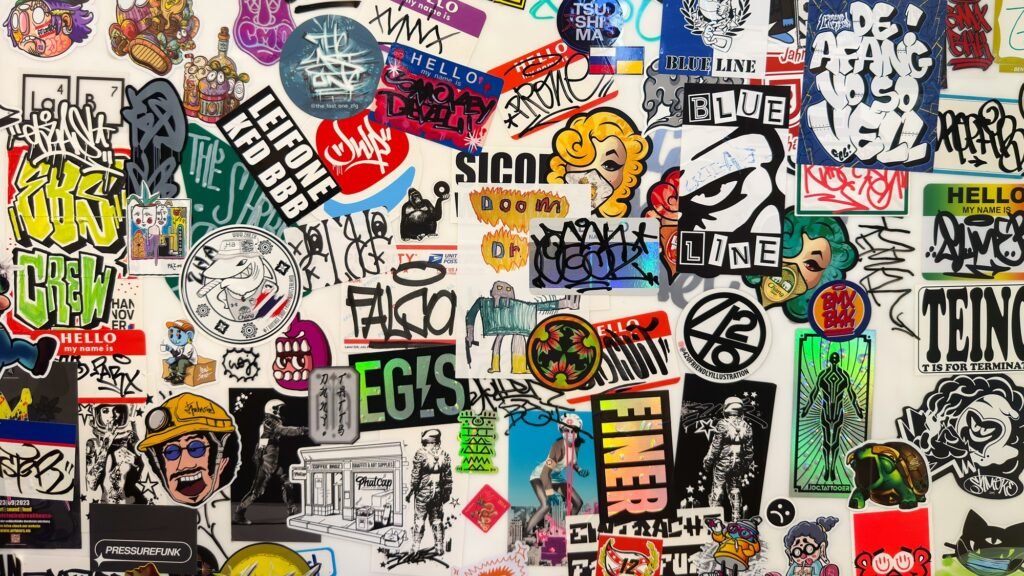
Clear stickers vs white vinyl stickers is one of those choices that looks tiny on the order form and then completely changes the final result. Same art, same size, same bottle or package, and suddenly one version looks clean and sharp while the other feels washed out or heavier than you wanted. That is because the material is not just holding the print. It is part of the design.
If you want the quick answer, white vinyl is the safer all-around option. It gives your design a bright, opaque base, so colors stay truer and small details stay easier to read. Clear stickers are more specialized. They can look excellent when you want a no-label feel on glass, plastic, or smooth metal, but the surface underneath becomes part of the artwork. That is the tradeoff.
So when people ask about clear stickers vs white vinyl stickers, they are really asking three things at once: what will look better, what will print more predictably, and what will make the most sense on the actual surface.
What Actually Changes Between Clear And White Vinyl
The biggest difference is the base material itself.
White vinyl gives you a solid white foundation. Your design prints onto an opaque surface, which means the sticker mostly looks the same no matter where you place it. Colors stay more consistent. White text stays white. Thin lines and small shapes stay easier to spot.
Clear stickers work differently. The material is transparent, so part of the final look comes from whatever is behind it. Put the same clear sticker on a white jar, a black bottle, and a stainless tumbler, and it will not look exactly the same in all three places. Sometimes that is the point. Sometimes it is the problem.
This is why clear stickers feel sleek and subtle. They visually disappear around the printed area. But that same effect can make them less forgiving.
When Clear Stickers Look Better
Clear stickers are great when you want the sticker to feel less like a separate object and more like part of the surface. On glass bottles, cosmetic packaging, windows, jars, and some polished metal surfaces, they can create a clean printed-on look that white vinyl cannot really fake.
They also work well for simple logo marks, minimal typography, and designs that do not need a big white border or a fully blocked-out background. If the packaging itself looks nice, clear stock lets you show it off instead of covering it.
At YouStickers, clear stickers are positioned for windows, bottles, and product labels, which makes sense. These are the surfaces where that transparent effect usually earns its keep. If your goal is subtle branding, not maximum punch, clear can be the better design move.
When White Vinyl Wins
White vinyl wins when you care about clarity, contrast, and fewer surprises.
If your design has bright colors, pale colors, white elements, fine details, or small text, white vinyl is usually the smarter choice. It also makes more sense when the sticker is going on a dark bottle, a colorful surface, or something textured and unpredictable. A white base gives the print room to stay readable.
This is also why white vinyl is usually the better pick for artist stickers, giveaway stickers, laptop decals, bold branding, and most general custom sticker orders. It works on more surfaces and asks fewer questions.
Here is a simple side-by-side view:
| If You Need | Better Choice | Reason |
|---|---|---|
| Strong color and readability | White vinyl | Opaque base keeps colors stable |
| A subtle printed-on effect | Clear stickers | Transparent material blends into the surface |
| Use on dark or busy surfaces | White vinyl | Clear stock can lose contrast |
| Minimal branding on glass | Clear stickers | Cleaner, lighter visual feel |
| Low-risk all-purpose order | White vinyl | More forgiving on more surfaces |
In other words, white vinyl is the practical default. Clear is the special move.
The White Ink Question
This is the part that trips people up.
Clear stickers are usually printed with white ink under some or all of the design so the colors do not disappear. YouStickers does this, and so do other printers in the category. Without white ink behind the art, clear stickers can look dull and weak, especially once applied.
But even with white ink, clear stickers are not exactly the same as white vinyl. The white ink layer is there to preserve opacity, not to turn clear stock into a full white base. In real use, clear stickers can still look somewhat translucent, especially on darker surfaces. And fully opaque white on clear material is not always possible in the way people imagine it.
So if the design depends on crisp white areas, very exact color presentation, or strong contrast against a dark bottle, white vinyl is still the safer answer.
Surface Color Changes The Result
This is why clear stickers can look amazing in a mockup and a little off in real life. The surface underneath matters.
On a white bottle, clear stock can look bright and clean. On a black bottle, the same clear sticker may lose some visibility unless the art has enough white ink support and contrast. On brushed metal, the bottle texture and reflectivity can change how the colors feel. On tinted glass, everything shifts again.
White vinyl is less sensitive to all of this because it brings its own background with it. That is boring advice, maybe, but very useful advice.
If you are selling products and need consistency across batches, white vinyl or opaque label materials are often easier to manage. If you are doing a small run and the bottle itself is part of the brand look, clear becomes a lot more interesting.
Durability And Finish
In terms of durability, clear stickers vs white vinyl stickers is not always a huge fight. Both can be durable and water-resistant when they are printed on film materials with the right finish. At YouStickers, clear stickers use transparent vinyl with laminate, and the main white vinyl sticker line is also built for weather, water, and daily handling.
So durability alone usually should not decide it.
Finish matters more than people think, though. Gloss on clear stock often looks sharper because it reinforces that clean, polished feel. Matte can work too, especially if you want less glare, but clear plus gloss is a common pairing for a reason. White vinyl gives you more flexibility. Matte can make it feel softer and more modern. Gloss can make color feel richer.
If the sticker is going onto drinkware or packaging that gets handled often, laminate is the part I would not skip.
Which One Should You Order?
If you want the easy rule, use white vinyl unless you have a clear reason not to.
Choose clear stickers when:
you want a no-label look,
the bottle or package is part of the visual appeal,
the design is simple,
and the surface is light, smooth, or otherwise friendly to transparency.
Choose white vinyl when:
you want the artwork to stay consistent,
you need strong contrast,
the surface is dark or textured,
or you just do not want surprises.
That is why the answer to clear stickers vs white vinyl stickers usually comes down to design intent, not just material specs. One is not “better” in every situation. One is just less forgiving.
Conclusion
Clear stickers vs white vinyl stickers comes down to how much control you want over the final look. White vinyl gives you control. Clear stickers give you style.
If you want the safest, sharpest, most reliable result across different bottles, jars, laptops, and promotional uses, go with white vinyl. If you want something lighter, more minimal, and more integrated with the surface itself, clear stickers can look excellent. Just be honest about the artwork and the background color. That is where this decision is won or lost.
And if you are still torn, this is my blunt advice: order clear only when the transparent effect is the reason you want it. Otherwise, white vinyl will save you a lot of second-guessing.
Related Reading
If color and contrast are part of your decision, Logo Design for Stickers is worth reading next.
If you are also deciding on dimensions, The Ultimate Guide to Custom Sticker Sizes helps match size to use case.
